Tuesday, March 21, 2023

Will Interim CFOs Selected Internally Be Just a Trend or a Permanent Strategic Move?


 As the role of the CFO becomes increasingly important in today's business landscape, companies are grappling with how to fill the position quickly and effectively in times of transition. Interim CFOs have become a popular option for companies looking to maintain stability during leadership changes, and more and more companies are now turning to internal candidates to fill these temporary roles. But will this trend of selecting interim CFOs internally be just a passing fad, or will it become a permanent strategic move for companies?

There are several factors to consider when evaluating the use of interim CFOs selected from within the organization. First and foremost is the speed at which the company needs to fill the position. When a CFO departs, the organization can be left with a significant leadership gap that needs to be filled quickly. Turning to an internal candidate for an interim CFO role can provide continuity and stability during this period of transition.

Another advantage of selecting an interim CFO from within the organization is that they are already familiar with the company's culture, systems, and processes. This can help to ensure a smoother transition and avoid any disruptions to the company's operations. Additionally, internal candidates may have relationships with other key stakeholders within the company, such as the board of directors, that can help to build trust and confidence during the interim period.

However, there are also potential downsides to selecting an interim CFO from within the organization. Internal candidates may have pre-existing relationships and biases that can impact their decision-making, and they may not be able to provide the fresh perspective that an external candidate could bring. There is also the risk that the interim CFO may become too comfortable in the role and may not be as motivated to pursue permanent candidates, potentially delaying the hiring process.

Ultimately, whether selecting an interim CFO internally will become a permanent strategic move for companies will depend on a number of factors, including the company's size, culture, and leadership structure. For some companies, the benefits of selecting an interim CFO from within the organization may outweigh the risks, while for others, an external candidate may be a better fit.

On the other hand, internal candidates may have a deep understanding of the company's operations, culture, and goals, and may already have established relationships with key stakeholders. This can enable them to hit the ground running and be effective in the role from day one, which is especially important when time is of the essence.

Additionally, naming an interim CFO from within the company can also signal to employees that the company is committed to developing and promoting its own talent. This can boost morale and motivation among employees, and can lead to increased loyalty and retention.

However, there are also potential downsides to naming an interim CFO from within the company. For example, the individual may be too entrenched in the existing culture and may struggle to bring fresh perspectives and ideas to the role. They may also face challenges in balancing their existing responsibilities with the demands of the CFO role, which can lead to burnout and decreased effectiveness.

Ultimately, whether naming an interim CFO from within the company is a trend or a permanent strategic move will depend on the specific needs and circumstances of each organization. In some cases, an internal candidate may be the best fit for the role and can provide continuity and stability during a leadership transition. In other cases, bringing in an external candidate with fresh perspectives and experiences may be necessary to drive change and growth.

In either case, it is important for companies to carefully consider their options and make a strategic decision that aligns with their overall goals and vision.

In conclusion, interim CFOs selected internally can be an effective way to maintain stability and continuity during times of transition. However, companies must carefully evaluate the pros and cons of this approach and weigh it against other options to determine whether it is the best strategy for their specific circumstances.

 Collaboration, Not Competition: Unlocking the Full Potential of Synergy

"Competing against each other might be fun, but collaborating together is how we change the game."


When it comes to achieving great things, there is one concept that stands out above all others: synergy. Simply put, synergy is the idea that two or more people or groups working together can achieve more than the sum of their individual efforts. However, in order to truly unlock the full potential of synergy, we must shift our mindset from one of competition to one of collaboration.


Competition has long been the driving force behind many aspects of our lives, from sports and business to politics and personal relationships. However, while competition can be a great motivator, it can also be a roadblock to achieving true synergy. When we are focused solely on beating our opponents, we are less likely to work together and find common ground.

Collaboration, on the other hand, is all about working together towards a common goal. When we collaborate, we bring our individual strengths and skills to the table and work towards a shared vision. By doing so, we can create something truly remarkable that none of us could have achieved alone.

The benefits of collaboration extend beyond just achieving great things. Collaboration also fosters a sense of community and belonging, as we work together towards a common purpose. It can also help us develop new skills and perspectives, as we learn from those around us and broaden our horizons.

So how can we shift our mindset from one of competition to one of collaboration? It starts with recognizing that we are all in this together. Whether we are working towards a shared goal or simply trying to navigate our day-to-day lives, we are all interconnected in some way. By embracing this interconnectedness and focusing on what we can achieve together, we can break down the barriers that separate us and unlock the full potential of synergy.

In conclusion, collaboration, not competition, is the key to unlocking the full potential of synergy. By working together towards a shared vision, we can achieve more than we ever could have on our own. So let's shift our mindset and start collaborating towards a brighter future for all of us.

 "What It Takes to Get There":


What does it take to achieve success? Is it talent, hard work, or luck? The answer is all of the above, but the most important factor is determination. Success is not easy to achieve, and it requires a lot of effort and perseverance. In this blog, we will discuss what it takes to get there.

Clear goals - The first step towards success is to set clear goals. What do you want to achieve, and how do you plan to get there? Setting clear goals helps you focus your efforts and stay motivated.

Hard work - Success is not handed to you on a silver platter. You have to work hard and put in the effort to achieve your goals. Hard work means dedicating time and energy to your goals and being persistent in the face of setbacks.

Resilience - Success is not a straight line. There will be setbacks and obstacles along the way. The key is to be resilient and bounce back from these setbacks. Resilience means having the mental and emotional strength to overcome challenges and stay on track.

Learning mindset - Success is not just about working hard, it's also about learning and growing. Having a learning mindset means being open to new ideas and experiences, and seeking out opportunities for growth and development.

Networking - Success is not achieved in isolation. Building strong relationships and networks is essential for success. Networking means reaching out to others, building relationships, and leveraging those relationships to achieve your goals.

Self-discipline - Success requires self-discipline. This means setting priorities, managing your time effectively, and staying focused on your goals. Self-discipline also means making sacrifices and delaying gratification in the pursuit of long-term goals.

Passion - Finally, success requires passion. Passion is the driving force behind your goals and keeps you motivated when the going gets tough. Passion means pursuing your goals with enthusiasm and commitment.

In conclusion, achieving success requires a combination of factors, including clear goals, hard work, resilience, a learning mindset, networking, self-discipline, and passion. Success is not easy, but with determination and the right mindset, you can achieve anything you set your mind to. So, set your goals, work hard, stay resilient, keep learning, build your network, stay disciplined, and pursue your passion. Good luck on your journey to success!


Be an Expert and Not a Job Seeker

.


In today's competitive job market, it's easy to fall into the trap of thinking that finding a job is the end goal. However, it's important to remember that being a job seeker is only a temporary state. To build a successful career, one must aim to be an expert in their field.


So, what does it mean to be an expert? It means having a deep understanding of your industry, being knowledgeable about the latest trends and technologies, and having the skills and experience to solve complex problems. Experts are the go-to people for advice, solutions, and innovative ideas. They are highly respected and in high demand.


Here are some tips on how to become an expert in your field:


Develop a strong foundation of knowledge: To become an expert, you need to have a solid foundation of knowledge in your field. This can be gained through formal education, training, or self-study. Read industry publications, attend conferences, and take courses to stay up-to-date on the latest developments.


Build practical experience: In addition to knowledge, practical experience is essential to becoming an expert. Seek out internships, apprenticeships, or entry-level positions to gain hands-on experience. Take on challenging projects and learn from your successes and failures.


Focus on developing a specific skillset: Instead of trying to be good at everything, focus on developing a specific skillset that sets you apart from others in your field. This could be a technical skill, like coding or data analysis, or a soft skill, like leadership or communication.


Seek out mentors and networks: Connect with experts in your field and seek their guidance and advice. Join professional associations, attend industry events, and participate in online communities to build your network and learn from others.


Continuously learn and grow: The world is constantly evolving, and to remain an expert, you need to keep learning and growing. Continuously seek out new challenges and opportunities to expand your knowledge and skills.


In conclusion, being a job seeker is only a temporary state. To build a successful career, aim to be an expert in your field. By developing a strong foundation of knowledge, gaining practical experience, focusing on a specific skillset, seeking out mentors and networks, and continuously learning and growing, you can become a respected and sought-after expert in your industry.

Monday, March 20, 2023

 Navroz Festival: A Celebration of Renewal and Hope for Ismailis


Title: Navroz: A Time of Renewal and Celebration for Ismailis

Introduction:

Navroz, also known as Nowruz or Persian New Year, is a festive occasion celebrated by Ismaili Muslims and various other communities around the world. The event marks the beginning of the new year in the Persian calendar, falling on the Spring Equinox, typically around March 20th or 21st. The word "Navroz" itself means "new day" in Persian. This ancient festival, with roots dating back over 3,000 years, is a time of renewal, joy, and unity. In this blog post, we will explore the significance of Navroz for Ismailis and delve into the customs and traditions that make this celebration unique.

History and Significance:

Navroz has its origins in Zoroastrianism, the ancient Persian religion that predates Islam. It is believed that the prophet Zoroaster instituted Navroz as a celebration of the renewal of nature and the triumph of good over evil. Over time, the festival was adopted by various communities, including the Ismaili Muslims, who recognize it as a time of spiritual renewal and an opportunity to strengthen ties within the community.

For Ismailis, Navroz is also an occasion to reaffirm their allegiance to the Imam of the time, the spiritual leader and descendant of Prophet Muhammad. The current Imam, His Highness Prince Karim Aga Khan IV, has emphasized the importance of pluralism, compassion, and the well-being of humanity, values that are reflected in the Navroz celebrations.

Customs and Traditions:

Navroz celebrations among Ismailis are characterized by a mix of cultural and religious traditions. Some of the most common customs include:

  1. Haft-Seen: A decorative table setting featuring seven symbolic items, each starting with the Persian letter 'seen' (س). These items represent health, abundance, happiness, patience, love, and sunrise, among other things.

  2. Spring Cleaning: In the days leading up to Navroz, families engage in thorough cleaning and decluttering of their homes, symbolizing a fresh start for the new year.

  3. New Clothes: Wearing new clothes on Navroz is a way to embrace the spirit of renewal and to express gratitude for the blessings received throughout the year.

  4. Visiting Family and Friends: Ismailis visit family, friends, and neighbors during Navroz, fostering a sense of community and strengthening bonds.

  5. Sharing Food: Food plays a central role in Navroz celebrations, with families preparing and sharing traditional dishes, such as biryani, jalebi, and kulfi. Sharing food not only fosters togetherness but also symbolizes the sharing of blessings and good fortune.

  6. Prayers and Devotional Gatherings: Ismailis attend special prayers at Jamatkhanas (community centers) on Navroz, seeking blessings and expressing gratitude for the past year's experiences.

Conclusion:

Navroz is a deeply meaningful occasion for Ismailis, embodying the spirit of renewal, gratitude, and community. The festival allows individuals to reflect on their spiritual journey, strengthen relationships, and appreciate the diversity and beauty of the world. As Navroz approaches, let us embrace the values of compassion, unity, and hope that this ancient celebration represents, and share the joy of new beginnings with our loved ones and communities.

Sunday, March 19, 2023

 SATISFACTION IS BETTER THAN SUCCESS

"Choose satisfaction over success, because true fulfillment cannot be measured by external achievements."


Satisfaction is Better than Success: Why Happiness Should Be Your Ultimate Goal

In today's world, success is often equated with wealth, fame, and power. We are conditioned to believe that these are the ultimate markers of success and that achieving them will bring us happiness. However, research shows that this is not the case. In fact, happiness should be our ultimate goal, and satisfaction should be the true measure of our success.

What is satisfaction, and how is it different from success? Satisfaction is the feeling of contentment and fulfillment that comes from living a life that aligns with our values and goals. It is the sense of peace that comes from knowing that we are doing our best, and that we are making a positive impact on the world around us. Success, on the other hand, is often defined by external markers such as wealth, fame, and power. While these things may bring temporary happiness, they do not provide lasting satisfaction.

So why is satisfaction more important than success? First and foremost, satisfaction is sustainable. While success can be fleeting, satisfaction is a state of being that can be cultivated and maintained over time. When we focus on living a life that aligns with our values and goals, we are able to find meaning and purpose in our everyday actions. This sense of purpose provides a deep and lasting sense of satisfaction that cannot be achieved through external markers of success.

Secondly, satisfaction is a key driver of well-being. When we are satisfied with our lives, we experience less stress, anxiety, and depression. We are better able to cope with life's challenges and to bounce back from setbacks. This is because satisfaction is a source of resilience - it provides us with the inner strength we need to face life's ups and downs with grace and equanimity.

Finally, satisfaction is the key to building strong and healthy relationships. When we are satisfied with ourselves and our lives, we are better able to connect with others. We are more empathetic, more compassionate, and more loving. This, in turn, allows us to build deeper and more meaningful relationships with those around us.

So how can we cultivate satisfaction in our lives? The first step is to define our values and goals. What matters most to us? What do we want to achieve in our lives? Once we have a clear sense of our values and goals, we can begin to align our actions with them. This may mean making changes to our work, our relationships, or our daily routines. It may mean taking risks, trying new things, and stepping outside of our comfort zones. Whatever it takes, the key is to live a life that is true to who we are and what we believe in.

In conclusion, satisfaction should be our ultimate goal, and it should be the true measure of our success. When we focus on living a life that aligns with our values and goals, we are able to cultivate a deep and lasting sense of satisfaction that cannot be achieved through external markers of success. This, in turn, allows us to live happier, healthier, and more meaningful lives, and to build strong and healthy relationships with those around us. So forget about success, and focus on living a life that brings you satisfaction - it will be the best decision you ever make.

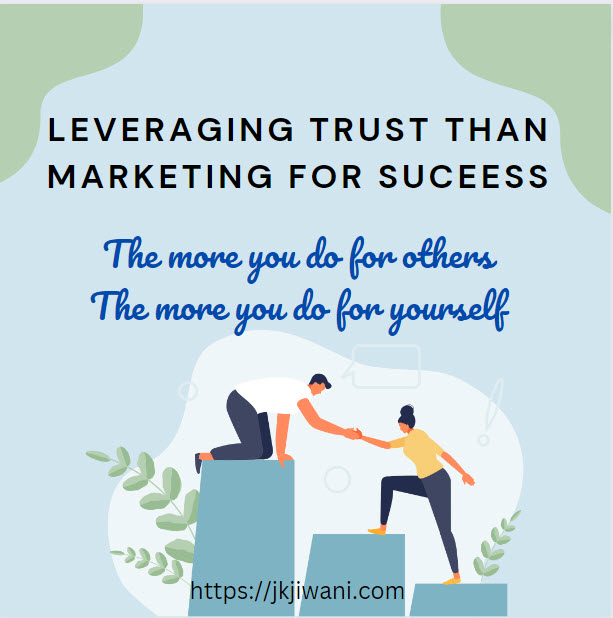
LEVERAGING TRUST THAN MARKETING FOR SUCEESS


In today's business world, there is no shortage of marketing strategies, tools, and tactics to promote products and services. However, one thing that many businesses overlook is the power of trust in building lasting customer relationships and achieving long-term success. While marketing can be effective in attracting new customers, leveraging trust can be even more valuable in retaining them.

Trust is the foundation of any successful business relationship. When customers trust a brand, they are more likely to make repeat purchases, refer others, and advocate for the brand. On the other hand, if customers don't trust a brand, they are likely to take their business elsewhere. Therefore, building and maintaining trust is crucial for any business looking to succeed.

One of the most effective ways to build trust is by focusing on customer experience. When customers have a positive experience with a brand, they are more likely to trust it. This can be achieved by delivering high-quality products or services, providing excellent customer service, and being transparent in all business dealings. By consistently meeting or exceeding customer expectations, businesses can build a strong foundation of trust with their customers.

Another way to leverage trust is by building a strong brand reputation. This can be done by establishing a clear brand identity, consistently delivering on promises, and maintaining a positive public image. By building a reputation as a trustworthy brand, businesses can attract and retain loyal customers.

In addition to focusing on customer experience and brand reputation, businesses can leverage trust through partnerships and collaborations. By partnering with other trusted brands, businesses can expand their reach and tap into new customer bases. This can be especially valuable in industries where trust is a key factor in customer decision-making, such as healthcare or financial services.

Finally, businesses can leverage trust by being authentic and honest in their marketing efforts. Consumers today are increasingly savvy and can quickly spot inauthentic or misleading marketing tactics. By being transparent and honest in all marketing communications, businesses can build trust with their customers and establish themselves as a reliable and trustworthy brand.

In conclusion, while marketing can be an effective tool in attracting new customers, leveraging trust is essential for achieving long-term success. By focusing on customer experience, building a strong brand reputation, partnering with trusted brands, and being authentic in marketing efforts, businesses can build a foundation of trust with their customers that will help them succeed for years to come.